
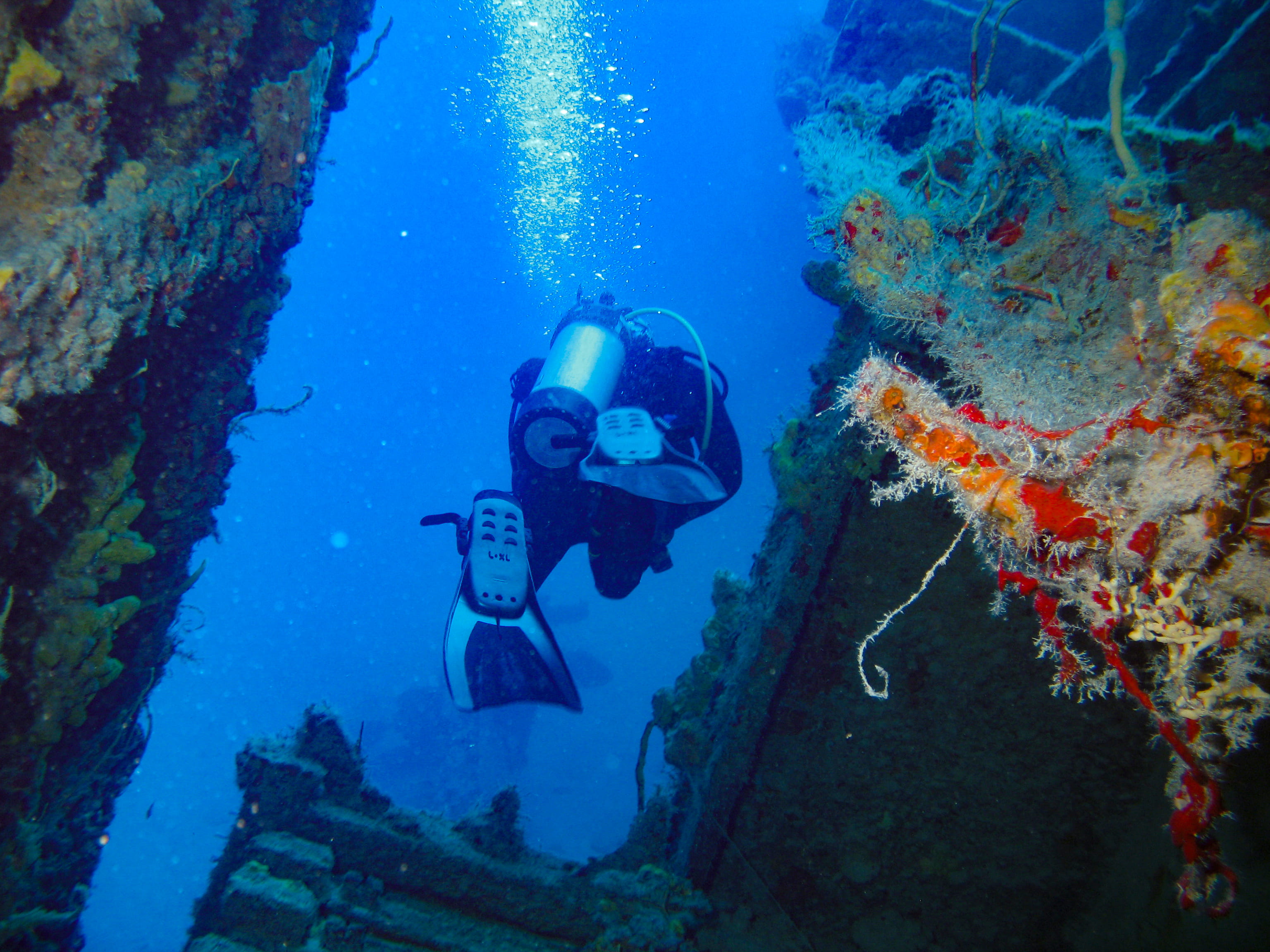
Diving the Eagle Wreck in Islamorada: What to Expect
The Eagle is one of the most iconic wreck dives in the Florida Keys. Here's what first-time wreck divers need to know before their Islamorada morning charter.
The Eagle Wreck at Islamorada Is One of the Best Wreck Dives in the Florida Keys — Here's What to Expect
Quick Takeaways
- The Eagle rests at 70–110 feet and is accessible to Open Water certified divers and above
- Visibility at the Eagle typically runs 40–80 feet — excellent for a wreck dive in the Upper Keys
- IDC's morning charter departs daily from Three Waters Marina, MM 84.5, Islamorada
- The wreck is covered in coral growth and hosts some of the most concentrated marine life in the region
- IDC guides are in the water with you on every dive — this is a fully guided operation
About 20 miles offshore from the Upper Florida Keys, sitting in roughly 110 feet of water, is a 287-foot freighter that was intentionally sunk in 1985 to become an artificial reef. Since then, the Eagle has become one of the most celebrated wreck dives in the Florida Keys — loaded with coral, filled with fish, and clear enough on most mornings that you can make out the hull from the surface. For certified divers visiting Islamorada, the Eagle is the dive. Islamorada Dive Center runs daily morning charters out of Three Waters Marina specifically to put divers on sites like this — with guides in the water and boats back at the dock before the afternoon wind picks up. Here's what first-time wreck divers need to know before they step aboard.
What is the Eagle wreck and why is it famous?
The Eagle was a 287-foot freighter originally named the Raila Dan, scuttled in June 1985 off the coast of Islamorada as part of the Florida Keys' artificial reef program. Intentionally sunk in an upright position, the wreck became one of the most diver-accessible freighters in the Atlantic — not broken apart, not buried in silt, but relatively intact and sitting in water shallow enough for recreational divers to reach.
In 1998, Hurricane Georges knocked the Eagle onto her port side, splitting the vessel in half and exposing new sections of the interior, creating the swim-throughs that divers explore today. The wreck has been colonizing with coral and sponge growth since 1985, and the marine life density around it is extraordinary — including massive goliath grouper, schools of Atlantic spadefish, morays in every crevice, and occasional sea turtles passing through the structure. For more on IDC's dive sites, visit islamoradadivecenter.com/florida-keys-dive-sites.
How deep is the Eagle wreck and what certification do you need?
The Eagle rests with the keel at approximately 110 feet and the highest accessible sections around 70 feet. Open Water certified divers can reach the shallower sections of the wreck on a guided charter. Advanced Open Water certification opens up the deeper portions, including sections closer to the keel, and allows divers to spend more time exploring the areas where the largest marine life tends to congregate.
Our expert Islamorada scuba diving guides are in the water for every Eagle exploration. For divers who have their Open Water certification but have never dived a wreck before, the guided format makes the Eagle entirely manageable. Guides set the pace, control the depth, and lead divers through the accessible sections without allowing anyone to drift into areas beyond their certification level. For Open Water divers wanting to see more of the wreck, IDC also runs Advanced Open Water courses — details at islamoradadivecenter.com/scuba-diving-courses/advanced-open-water-course.
What will I see on a morning Eagle wreck dive from Islamorada?
The marine life at the Eagle is the main event. Goliath grouper are almost certain — these federally protected fish have claimed sections of the wreck as their territory and can exceed 400 pounds. Seeing one at depth, hovering in a doorway inside the hull, is an encounter that stays with you. Schools of Atlantic spadefish orbit the superstructure throughout the dive. Moray eels occupy the smaller gaps in the wreck's frame. Nurse sharks rest on the sandy bottom below the hull.
Coral coverage on the Eagle is substantial after four decades of growth — black coral, sea fans, and encrusting sponges have transformed what was once a steel hull into something that looks and functions more like a reef. On a clear morning, the visual effect is striking from the moment you hit the water.
What are diving conditions like at the Eagle in summer?
Summer in the Florida Keys delivers reliably warm water — 83–85°F from June through August — meaning no wetsuit is required, though a thin 1–2mm skin suit provides comfortable protection from stinging hydroids on the wreck structure. Water clarity at the Eagle on morning dives typically runs 40–80 feet of visibility depending on current and wind conditions.
IDC's morning departure schedule is specifically designed to put divers on the Eagle before afternoon conditions change. From Three Waters Marina at MM 84.5 in Islamorada, the boat reaches the Eagle site in under 30 minutes — a short enough transit that seasickness is not a significant concern for most divers.
Insider Advice: If you're an Open Water diver hoping to spend time in the deeper sections of the Eagle, consider completing your Advanced Open Water certification before your wreck charter. IDC runs PADI courses and can certify you in Islamorada in two days — opening up the most interesting parts of the wreck, including the areas where the largest goliath grouper tend to hold. Many divers schedule one or two course days immediately before their Eagle charter specifically for this reason.
Schedule Your Visit
Islamorada Dive Center
PADI 5-Star Dive Center | Three Waters Marina, MM 84.5, Islamorada, FL
Daily guided charters, scuba courses, and ocean adventures for all skill levels, 365 days a year.
islamoradadivecenter.com | Book online for morning and afternoon departures
Frequently Asked Questions
Q: Can a beginner dive the Eagle wreck in Islamorada?
A: The Eagle requires Open Water certification — it's too deep for Discover Scuba programs, which are limited to shallow water. If you're Open Water certified, even recently, IDC's guided morning charter is designed to put certified divers on the wreck safely. Guides are in the water with you throughout the dive.
Q: How long is the boat ride to the Eagle from Islamorada?
A: From Three Waters Marina at MM 84.5, the Eagle is approximately a 20–30 minute boat ride offshore. IDC's departure location is one of the best-positioned in the Upper Keys for minimizing transit time and maximizing time on the wreck.
Q: What's the best time of year to dive the Eagle wreck in the Florida Keys?
A: The Eagle can be dived year-round from Islamorada. Summer mornings offer warm water, manageable winds, and typically good visibility. IDC operates 365 days per year with daily morning and afternoon departures, weather permitting.
Q: Do I need a wetsuit to dive the Eagle wreck in summer?
A: Water temperature at the Eagle runs 83–85°F in summer, so a full wetsuit isn't necessary. A thin 1–2mm skin suit or rash guard is comfortable for most divers and provides protection from stinging hydroids on the wreck structure. IDC can advise on gear needs when you book.
Islamorada Dive Center | Three Waters Marina, MM 84.5, Islamorada, FL | islamoradadivecenter.com
Stop Reading.
Start Diving.
Daily charters from Three Waters Marina. Open Water to advanced — we'll put you on the best reefs and wrecks in the Florida Keys.